
The 4Cs of Diamonds: What Actually Matters When Choosing a Ring
The 4Cs are cut, color, clarity and carat weight. They're useful for comparing diamonds, but they don't tell you everything about how a stone will look on your hand. Shape, face-up measurements, facet pattern and the setting all play a part.
The goal isn't the highest grade in every category. It's the combination that looks right to you at a comfortable budget.
Carat: how much the diamond weighs
Carat is weight, not width. One carat equals 0.2 grams. Two diamonds of the same weight can look different in size from above because their depth, proportions and shapes differ. Compare millimeter measurements and face-up videos alongside carat; a well-cut stone slightly under a round number can look just as substantial.
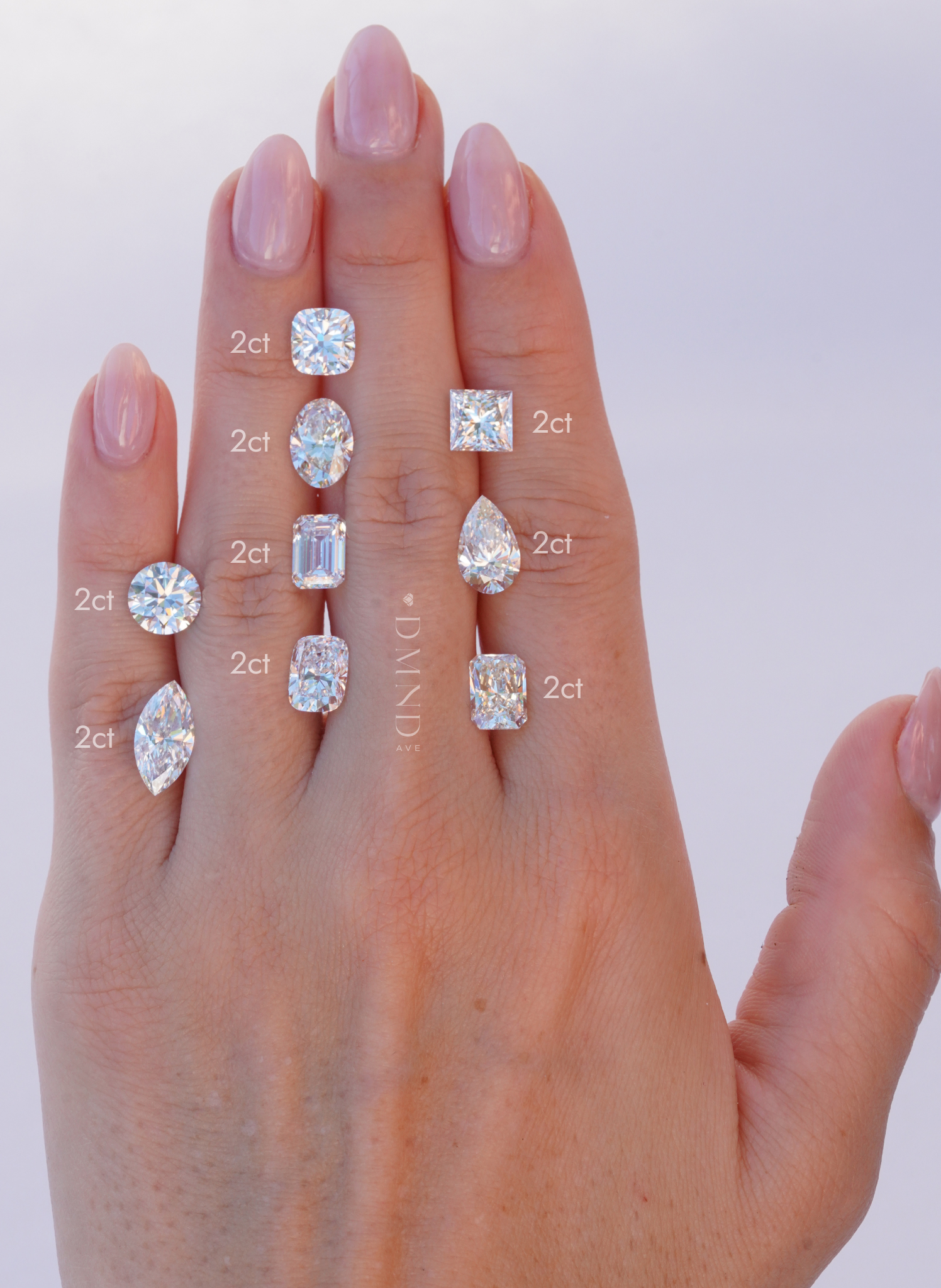
Cut: how the diamond handles light
Cut describes how a diamond's proportions and facets interact with light: its brightness, fire and contrast. Cut is not the same as shape. "Oval" or "emerald" describes the outline; the cutting determines how each stone performs.
Round brilliant reports commonly include an overall cut grade. Fancy shapes like oval, emerald, radiant and cushion typically do not, so videos and side-by-side comparison matter even more.

Color: how much warmth you can see
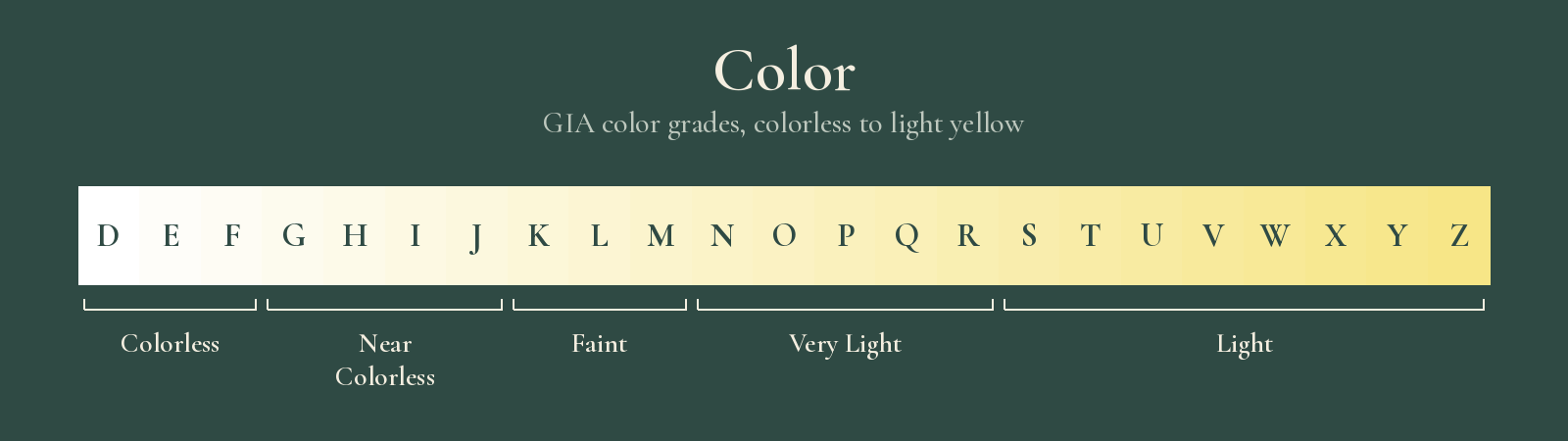
White diamonds are commonly graded on a D-to-Z scale, from colorless (D) to increasingly noticeable yellow or brown tint. A one-grade difference on paper is often hard to see in a finished ring. Shape, size, lighting and metal all affect how much warmth you notice, and a yellow gold setting reads differently from white metal.
Decide how sensitive you are to warmth by looking at real diamonds, ideally in the metal you want. Not everyone needs a D color.
Clarity: what's inside the diamond
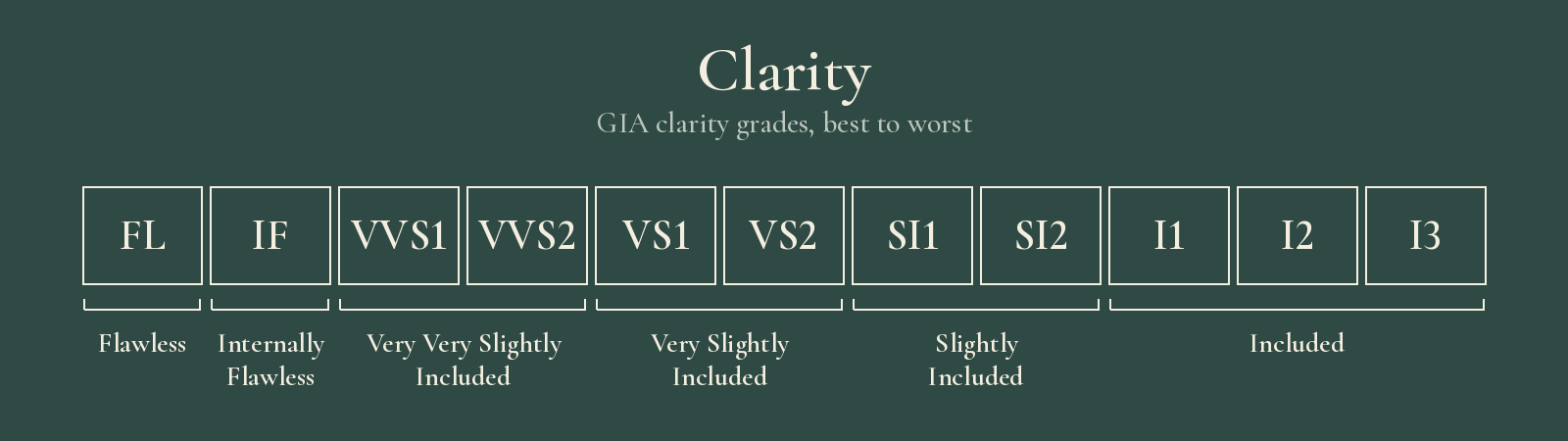
Clarity describes internal inclusions and surface blemishes, graded from Flawless down to Included. What matters is an inclusion's size, type, location and contrast. A small inclusion near the edge may be invisible, while one under the center of a step-cut stone can be easier to spot.
Aim for a diamond that looks clean to your eye at normal viewing distance, then use close-up images and the report for context. There's no universal grade every buyer must reach.
Grading reports
Every diamond we propose comes with an independent grading report, mainly from IGI for lab-grown diamonds and GIA for natural diamonds. Labs don't all describe lab-grown diamonds the same way, so we walk you through what each report does and doesn't tell you. For lab-grown vs natural, see our comparison guide.
How to balance the 4Cs
Start with the shape and look you love. Then decide what matters most: a bigger face-up look, lively sparkle, a whiter appearance or a distinctive setting. Your priorities show where higher grades are worth it and where they won't change what you see.
If presence matters most, compare measurements before adding carat weight. If you love an emerald cut, give clarity extra attention. If you're choosing yellow gold, you may be comfortable with a warmer color grade. After your deposit, Alain sources real stones that fit your priorities so you can compare them side by side.
Choosing a diamond with DMND Ave
Once your 50% deposit is in, Alain starts sourcing, and his bar is high. A diamond has to meet his standard before you ever see it. He also takes what you care about to heart, whether that's size, sparkle, color or budget, and picks options that fit you. For every stone, you get several videos in different lighting, magnified videos that show what's really inside, and the full grading report. Questions come up, and the group chat is right there for them. You'll know exactly what you're buying.
Ready to start? Book a free 30-minute consultation with Alyssa or another jewelry designer. We work with clients worldwide.