
Lab-Grown and Natural Diamonds: What You Need To Know.
Lab-grown and natural diamonds are both real diamonds. They look the same, they wear the same, and both are independently graded. Where they differ is in origin and price.
We design engagement rings with both, and we don't push either one. Here's how they compare, and how we help couples decide.
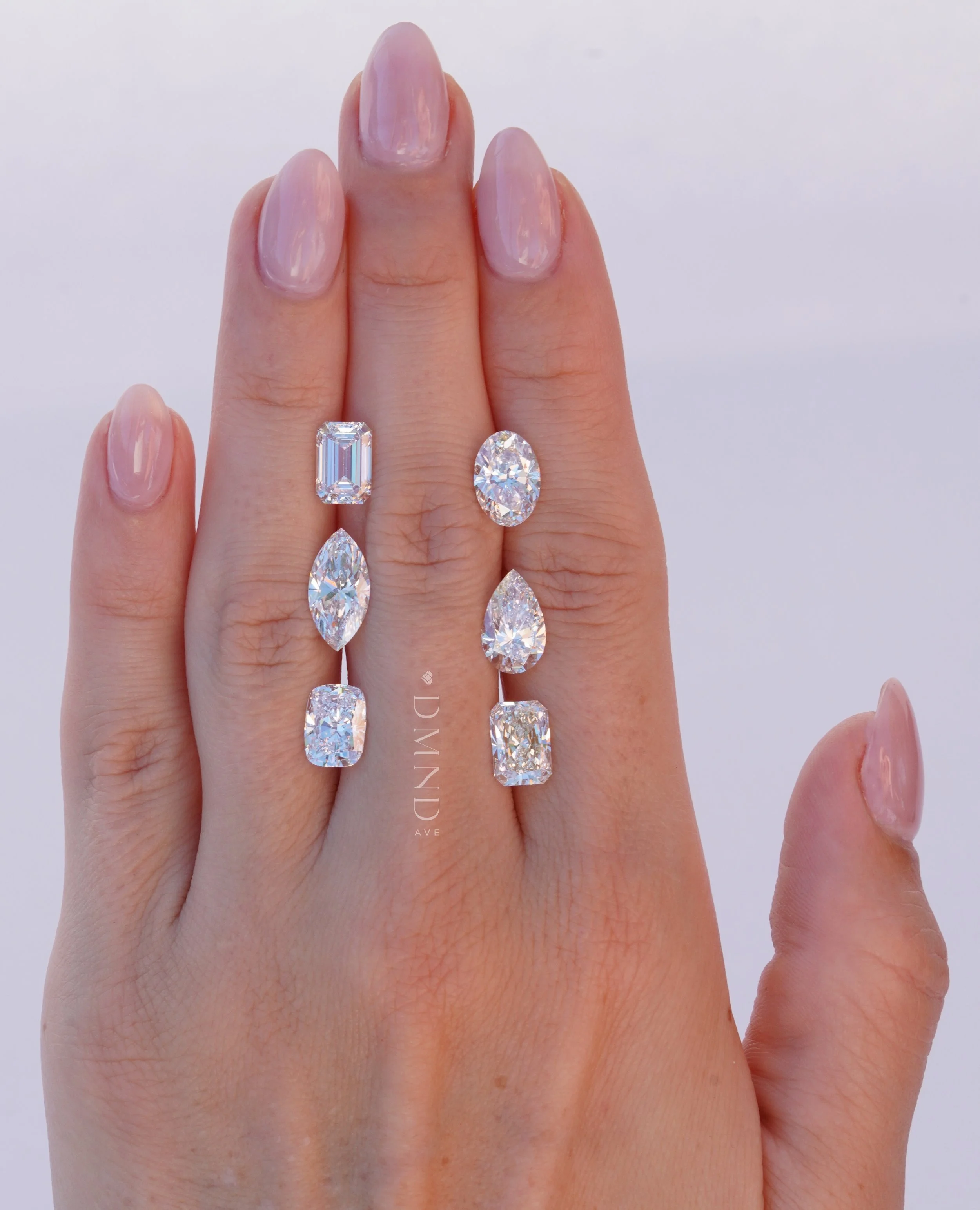
Natural diamonds formed in the earth over a very long time. People choose them for their origin and rarity, and because they generally have a more established secondary market.
Lab-grown diamonds are grown above ground over a period of weeks. They're the same material, with the same physical and optical properties. People often choose them so more of the budget can go toward a larger stone, a specific grade, or a more detailed setting.
Both make beautiful, lasting engagement rings. Neither is the "better" diamond. It comes down to which trade-offs suit you.
How they compare
| Lab-grown diamond | Natural diamond | |
|---|---|---|
| Composition | Made of approximately 99.9% crystalline carbon, with trace impurities possible | Made of approximately 99.9% crystalline carbon, with trace impurities possible |
| Look | Indistinguishable by eye | Indistinguishable by eye |
| Everyday durability | 10 on the Mohs scale | 10 on the Mohs scale |
| Grading report | Independent IGI report | Independent GIA report |
| Price comparison: 2ct F/VS Round | Under $3,500 | Often over $15,000 |
| Resale | Often little to no resale value | May retain approximately 20–50% of the original retail price, although resale values vary |
| Sourcing time (in our process) | Generally quicker to source; timing varies | Generally takes longer to source; timing varies |
| Best fit if you prioritize | Maximizing your budget, size and specific grades | Origin and rarity |
FAQs
Do they look different?
Not to the eye. A well-cut lab-grown diamond and a well-cut natural diamond of the same grade look the same, both on the hand and up close and under magnification.
The differences you'll actually notice are between individual diamonds, whichever kind they are. Cut quality, proportions, and shape effect sparkle far more than origin does. That's where we spend most of our time when we help you choose a center stone.
Are they equally durable?
Yes. Lab-grown and natural diamonds have the same hardness, and both hold up to everyday wear. They both score a 10 on the Mohs scale. Like any diamond, either one can chip from a hard knock at the wrong angle, especially at exposed points and corners. Pears, marquises, princess cuts, and emerald cuts benefit from a setting that protects their edges. We design for that whichever diamond you choose.
How they're graded and certified
Every diamond we source, lab-grown or natural, comes with a grading report from an independent gemological lab. The report states whether the diamond is natural or lab-grown. We mainly use IGI for lab-grown diamonds and GIA for natural diamonds.
For each diamond we propose, we'll go through its report with you: what the grades mean, which ones matter for your shape, and where it's worth spending. New to the 4Cs? Start with our guide to the 4Cs of diamonds.
Price, value, and resale
Price. A lab-grown diamond is priced lower than a natural diamond of similar size and grade. The gap changes over time, so we quote real stones rather than publish a rule of thumb. To see how the center-stone choice fits into the complete ring budget, explore our custom engagement ring cost guide.
Value and resale. Retail diamonds aren't investments, whichever you choose.
Can a jeweler or a diamond tester tell if a diamond is lab-grown?
No, a jeweler cannot tell the difference with their naked eye. Traditional diamond testers can confirm that a stone is diamond, but they do not reliably distinguish natural from laboratory-grown diamonds. That requires specialized screening equipment or gemological-laboratory testing.
How are lab-grown diamonds made?
By one of two methods: chemical vapor deposition (CVD) or high pressure, high temperature (HPHT). Both produce real diamond crystal.
Not sure which is right for you?
If you still aren't sure which diamond option is best for you, we are happy to discuss it with you on the consultation. There, we discuss: your style, your budget, and what matters most to you in the diamond. Then Alain sources diamonds that fit those preferences, whether lab-grown or natural. From there, the design and approvals follow how the custom process works.
See more of our work and what our clients say, or find more answers in our FAQs.