
Radiant-Cut Diamonds: What to Look For
Radiant-cut diamonds combine a geometric outline with brilliant-style faceting. Most are rectangular with cropped corners, though square radiants exist too. The appeal is the contrast between crisp edges and lively flashes of light.
Two radiants with similar reports can look quite different on video, so comparing the actual stones matters more than choosing by numbers.
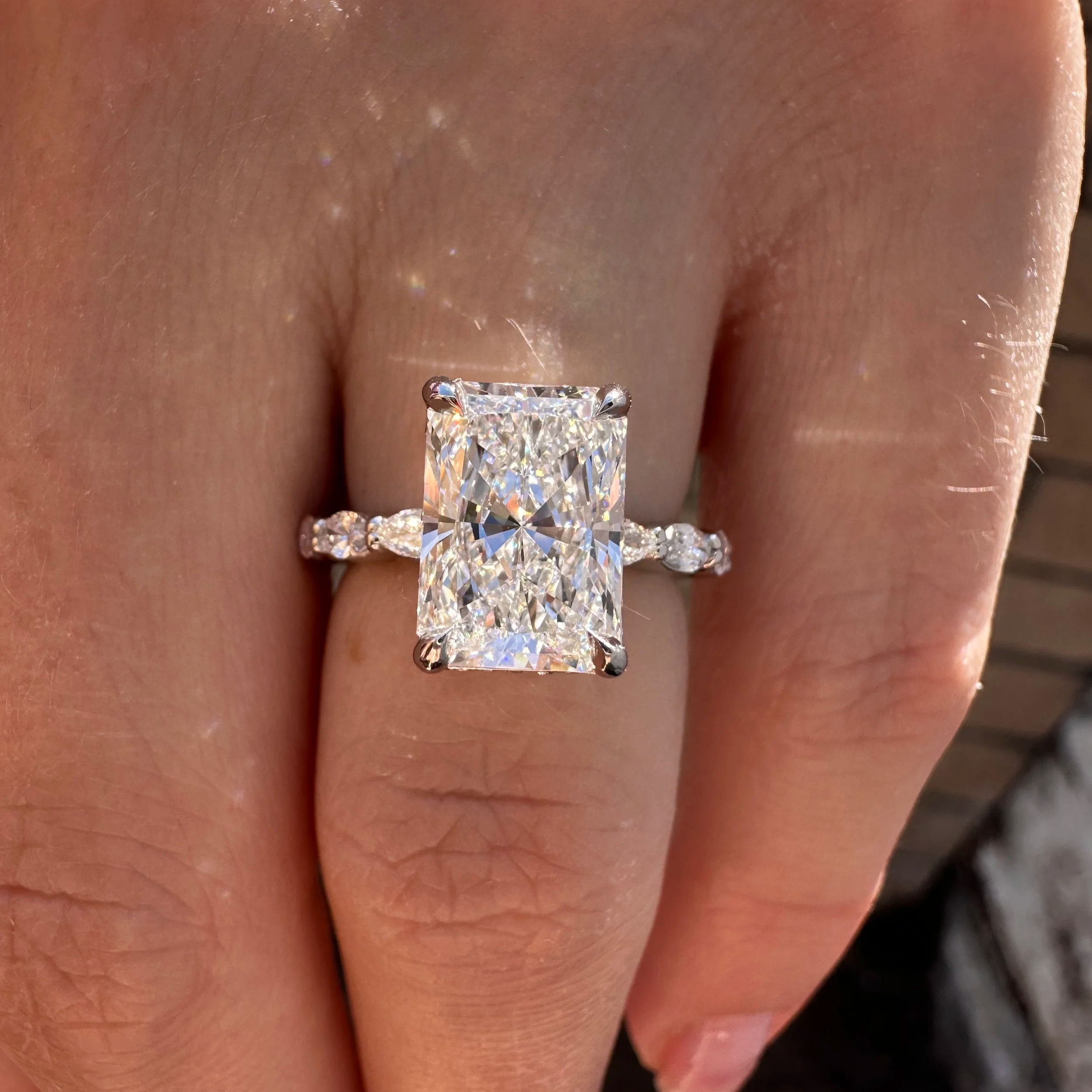
Why radiants sparkle differently
Radiants use many facets to break up and reflect light. Some show fine, scattered flashes, often called a "crushed-ice" look; others show larger, more distinct flashes. Neither is an official quality grade. Look for a balance of brightness, contrast and sparkle that you enjoy.
Watch videos under more than one lighting condition, and notice any dark areas that stay put as the stone moves.
Every diamond we propose comes with an independent grading report, mainly from IGI for lab-grown diamonds and GIA for natural diamonds. The report is the starting point; we still compare the actual stones in video before recommending one.
Rectangular or square?
The length-to-width ratio describes how elongated a radiant looks. Compare the outline, corners, symmetry and face-up millimeter measurements. Carat measures weight, not visible size, so two stones of equal weight can look different from above. Some radiants are custom-cut with softer corners, which can look closer to a cushion at a glance, so see the stone in video before deciding. Decide whether you prefer a longer rectangle or a squarer shape rather than chasing one ideal ratio.
Radiant cut vs emerald cut
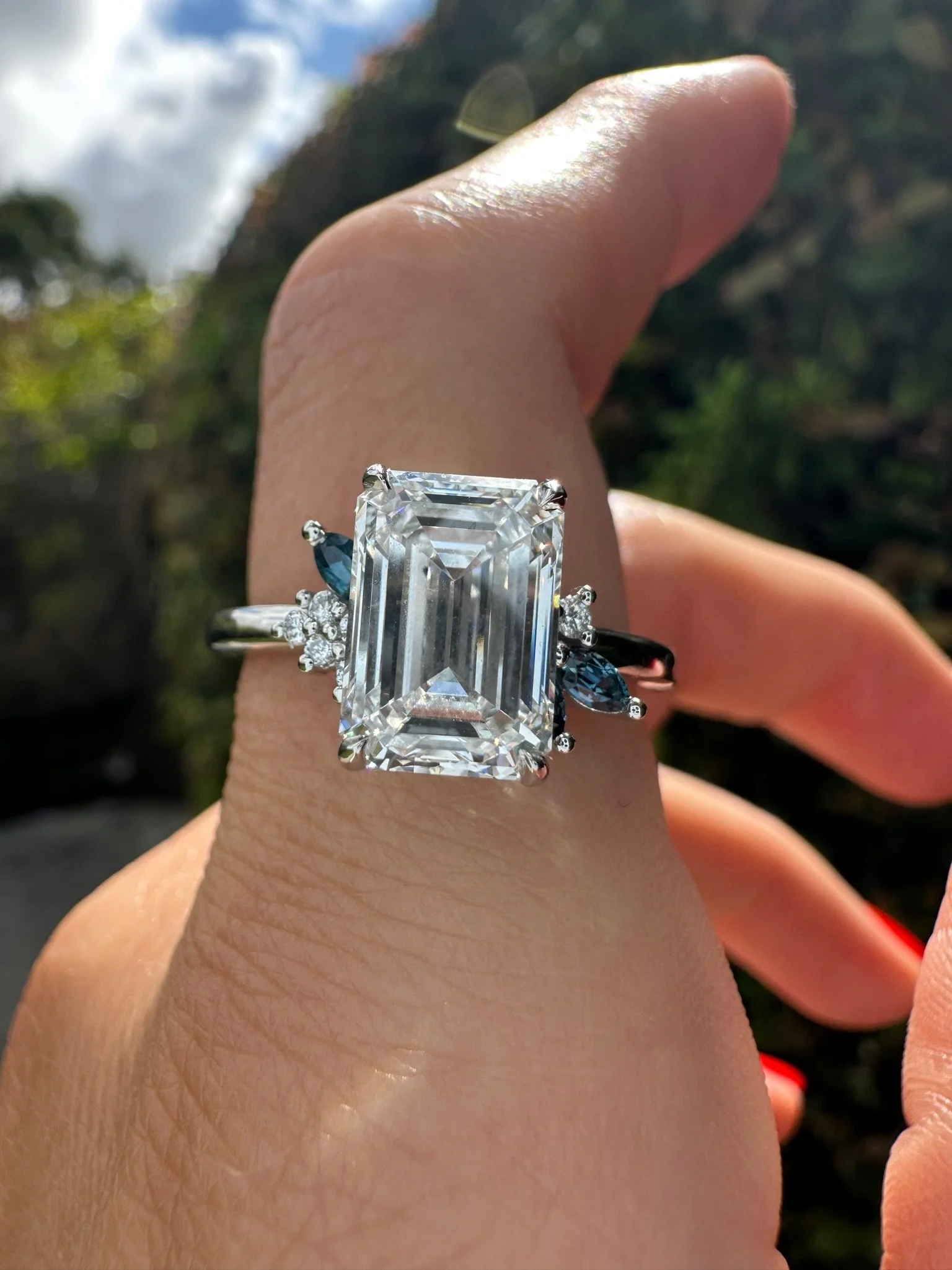
Both can share a rectangular outline with cropped corners. Radiant facets create smaller, brilliant-style flashes; emerald-cut facets create broad, step-cut reflections. Seeing real videos side by side is the easiest way to know which you prefer.
Radiant cuts usually have brilliant-style faceting inside a rectangular or square outline with cropped corners. Their reflections look different from the broader, step-cut flashes of an emerald cut. Actual sparkle depends on the stone’s proportions and cut quality.
Emerald cut center stone
Radiant cut center stone
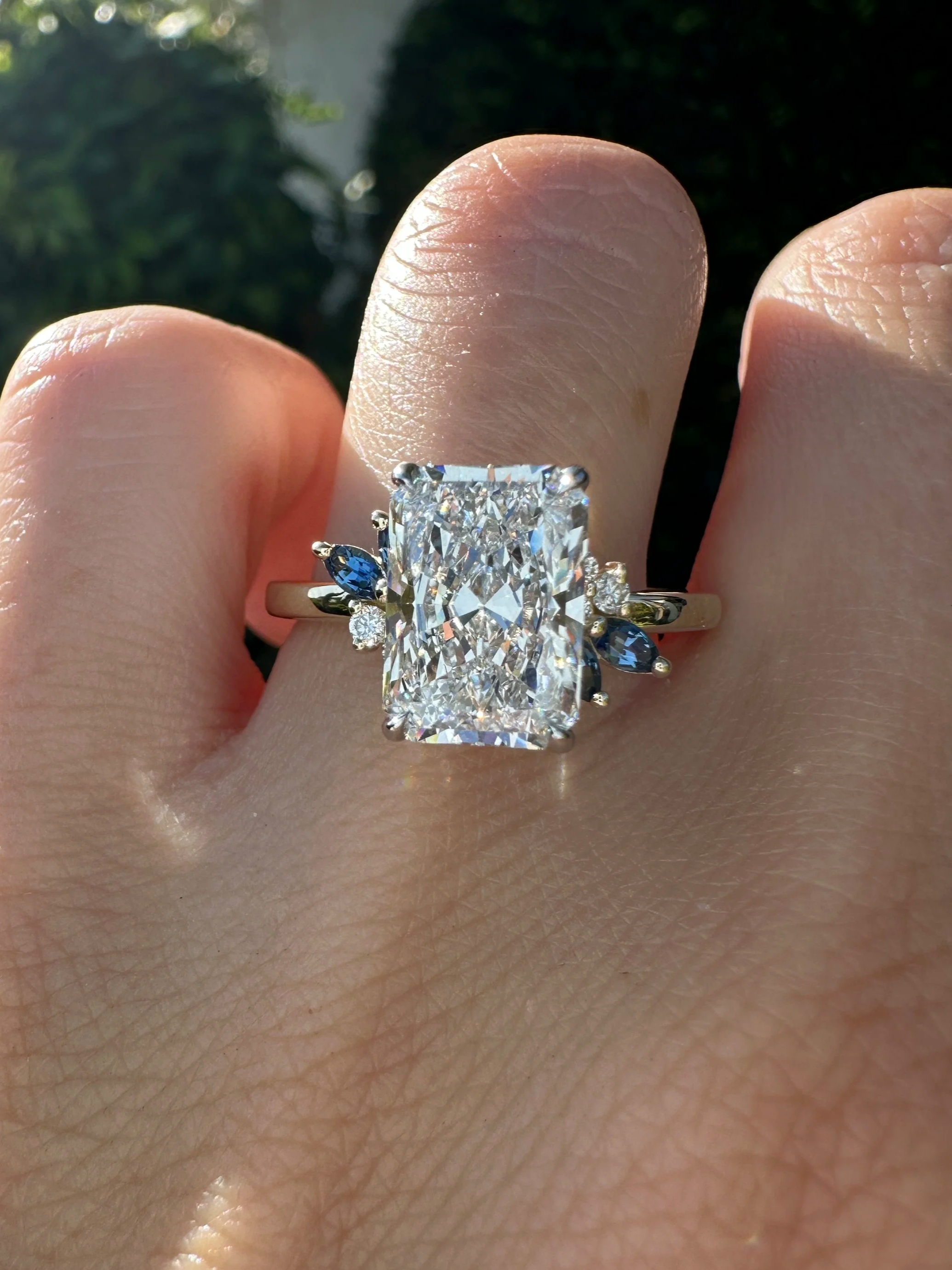
Settings for radiant engagement rings
A solitaire keeps the focus on the center stone. A diamond band adds sparkle, baguettes give a structured look, and colored accents add contrast. Band width, prong placement, setting height and wedding-band fit matter too. The corners should be secured without hiding the silhouette.
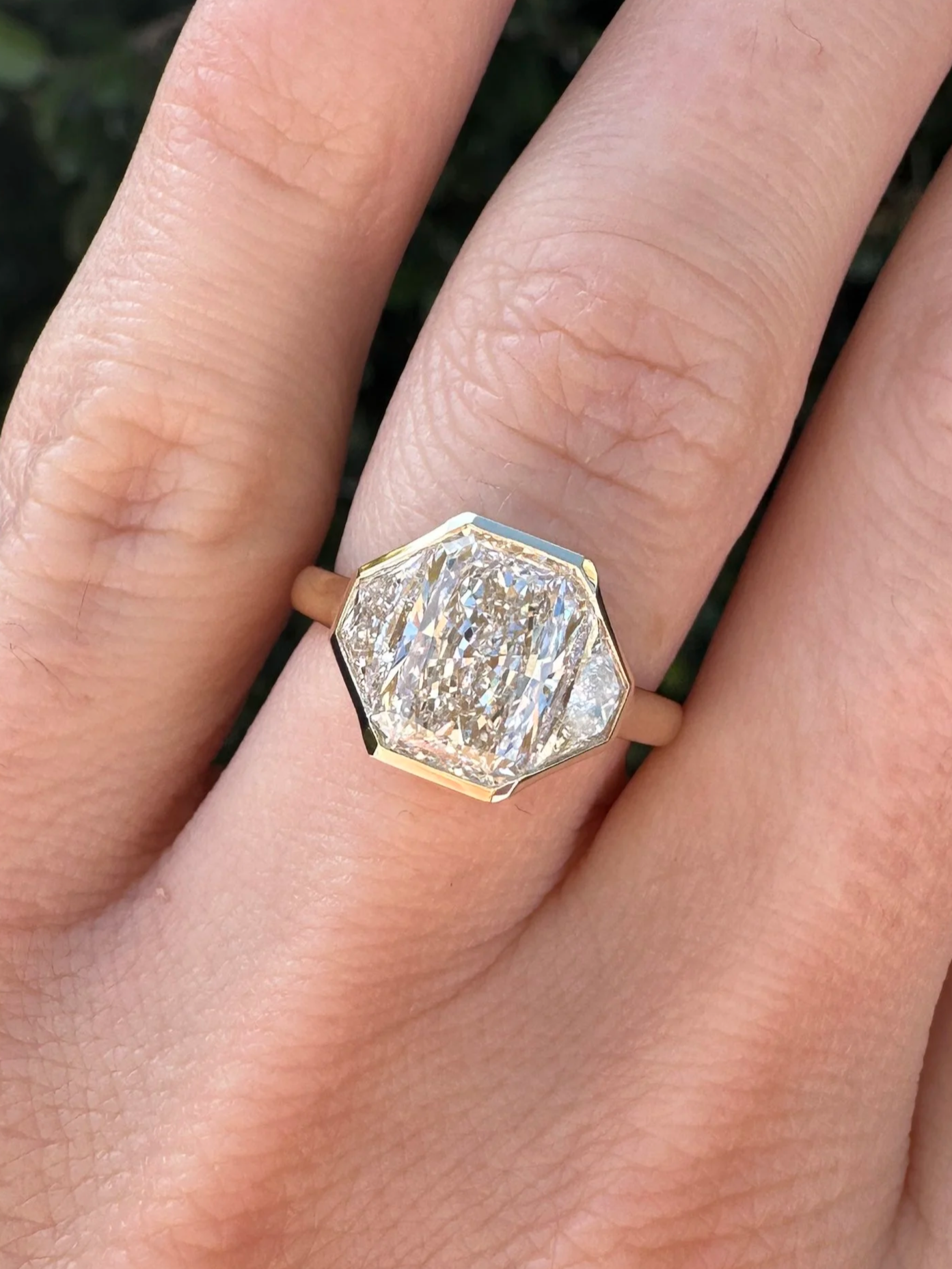
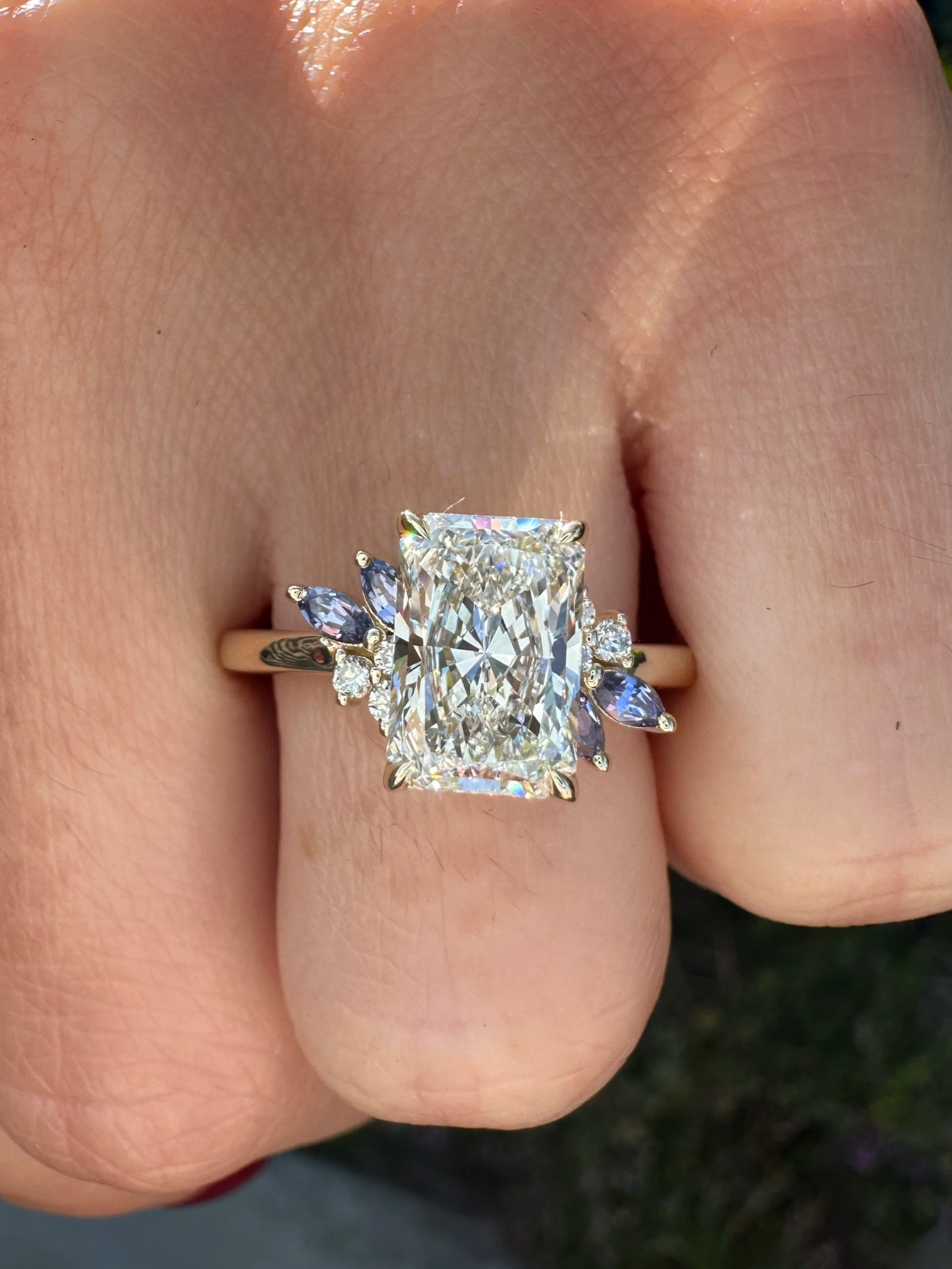
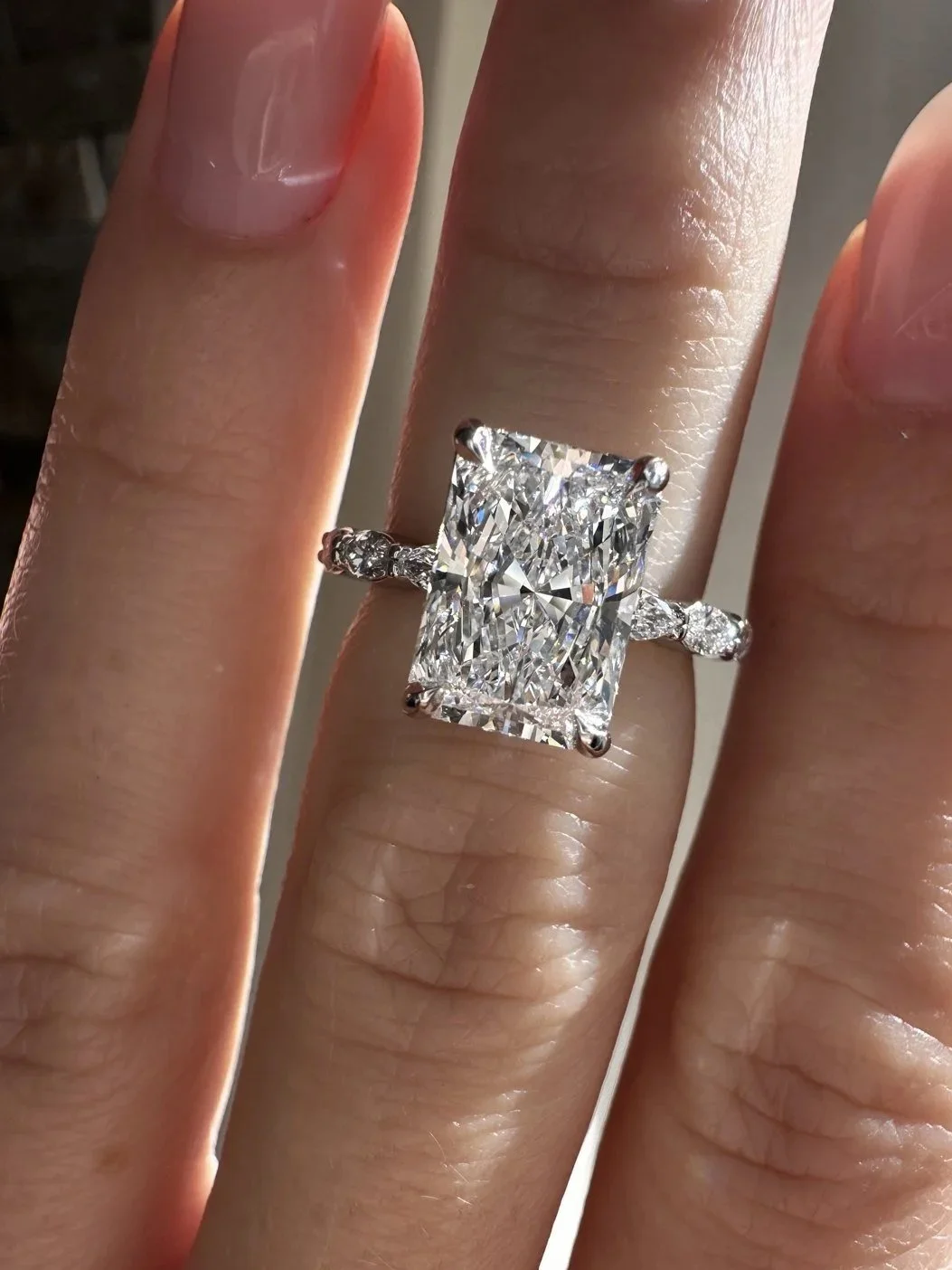
Lab-grown or natural?
We source both and compare them on appearance and your priorities. See lab-grown vs natural diamonds.
Designing your radiant ring with DMND Ave
Every ring starts with a free 30-minute video consultation, followed by a proposal with a preliminary sketch. After the 50% deposit, Alain sources diamonds for you to review, and you approve the diamond and the detailed 3D design before production. The full step-by-step process is on our custom engagement rings page.
Custom projects typically take 4–6 weeks from the 50% deposit to the finished ring, with insured FedEx shipping afterward. Budgets vary by diamond and design; see what a custom engagement ring costs.
Ready to start? Book a free 30-minute video consult with Alyssa. We work with clients worldwide.